This article is part of the ongoing Meditation for All challenge. Subscribers to the free newsletter receive weekly guidance and a daily practice.
For many people in the West, the mere idea of meditating is a significant source of stress. People will try almost anything before attempting “not doing,” aka meditating. Many people will say walking or swimming or dancing is their meditation. So, is that really meditating? Is that equally as beneficial as meditation?
This is a very common question. Because when most people hear about meditation, they usually first think, “That sounds terrible. That’s not for me. If I have to go one minute without my phone, I go crazy. Is there any other way? There’s got to be some other way.”
The answer to that question is really quite simple.
If meditation sounds difficult, then you need meditation.
If one minute sounds impossible, you need to go for 20 minutes.
The more we think we can’t meditate, the more reason we need to meditate. Because everyone has this ability.
We’ve lost it because of the on-demand entertainment and distractions that we all have in our pockets and on our computers. Unfortunately, there is no shortcut to lasting peace and joy.
There are many things that are meditative.
When I talk to people about meditation, often they’ll say something like, “For me, swimming’s my meditation,” or “Going for a walk is my meditation.” Or it could be dancing or singing and making art.
All of these things are not meditation; they’re swimming, walking, dancing, singing, and making art. But they are meditative in that they force the mind to become fully present. And they do have a very uplifting, positive effect on the brain. But the reason they’re different is that they don’t train the mind to see reality differently.
In meditation, we are training our mind to be present after the meditation is over. After you go swimming, or singing, or dancing, you’ll feel better but you won’t have trained the mind to be more focused, more present, more peaceful, or more joyful. But that is what meditation’s about.
It’s not about the activity of sitting down for 20 minutes; it’s about being more patient, relaxed, calm, intentional, and to think, speak, and act more consciously afterward.
Meditation is like becoming your own therapist because you’re observing your mind. You’re bringing consciousness to your unconscious thinking. And this can only be done when we turn off all the noise and distractions, close our eyes, and turn our entire attention inward.
That’s not to say, don’t do yoga, don’t sing, dance or make art; these things are what life is worth living for. But only in meditation are we training our brains to be present and observe life as it is without the artificial and subjective veil of judgments, opinions, and labels.
We live in a world today where many people think taking anxiety medication, ADHD medication, OCD medication, or antidepressants is for them, but meditation isn’t. But why not try both? Meditation can actually help with all those ailments, as it has for me.
I’ve struggled with anxiety, depression, OCD, ADHD, and addiction. None of those conditions are struggles in my life any longer, and I no longer take any medication. If you’re taking medication, I’m not saying to stop. For many people, these treatments are miracle drugs that have completely transformed lives.
However, by incorporating meditation, you may find the need for medicine decreases, and then the dosage may decrease. Eventually, you may find you don’t need it at all.
I believe when it comes to a natural cure with no side effects, that also brings an immense sense of peace, joy, love, gratitude, patience, focus, concentration, better physical health, lower stress, and better sleep, if you’re looking for a miracle, meditation is worth a shot.
So, as much as we may resist it, I encourage everyone to try it and stick with it. It may take a month, maybe three months, or even six months before you notice the changes. But what you’re doing is giving yourself a little 1% improvement every day.
So, each day you may not notice any change, but in 100 days, you’ll look back and realize you’re a totally different person, that this has completely changed your life, and you won’t know how you ever lived without it. That’s my personal story, and it’s the story of many people. So, give it a try. What have you got to lose?
In the next article, we’ll look at common misconceptions about meditation — if it’s passive, a placebo, religious, dangerous, suppressing our natural thoughts, or or an escape from reality.
The Meditation for All Challenge takes place in my newsletter, where I share:
• Weekly practices that accompany the reading
• Common difficulties and how to work with them
• Step-by-step instructions for meditation mastery
If you are reading this on the website, make sure you’re subscribed so you don’t miss the next step.
The Challenge Has Now Become a Book
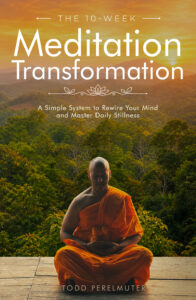
The full 10-week meditation journey, along with expanded teachings and answers to additional reader questions, is now available as
The 10-Week Meditation Challenge: A Simple System to Rewire Your Mind and Master Daily Stillness.
These 5 Minutes Could Shift Your Whole Week
Path to Peace Newsletter