
This article is part of the ongoing Meditation for All challenge. Subscribers to the free newsletter receive weekly guidance and a daily practice.
You are about to begin the single greatest daily habit you could ever do. Meditation improves every single aspect of a person’s life in countless ways. This is the only reason meditation has been passed down from generation to generation for thousands of years.
I believe that everyone can have a peaceful, calm, and stress-free life. When our mind is peaceful, we are able to direct our mind in one direction — the direction of personal and professional growth. Through meditation and mindfulness, you will experience better focus and concentration, better productivity and creativity, improved physical and mental health, control over addictions and anger, as well as greater joy and lasting happiness.
If you’ve recently started your journey, you’ll need guidance. As you already know, your mind can easily be distracted, and it’s easy to get off track. Here are my 7 tips for becoming a pro:
1. Keep Your Back Straight
This is a general rule for life that a Hindu guru at an ashram once told me: if you’re always slouched and leaning, you’re going to have a weak spine. It’s going to cause back problems, posture problems, and problems in regard to how we confront the demands of life.
So in meditation, just like in life, keep a straight back. It doesn’t matter if you’re in a chair, on the floor, in bed, or lying down. Make sure your back is straight, and you’re in a posture that supports health.
2. Relax Your Mouth
Unclench your jaws, slightly separate your teeth, and ensure that you’re not holding onto any stress. Rest your tongue where the roof of your mouth meets the back of your top front teeth, and just let it rest in there. If you can, raise the sides of your mouth to form a subtle smile.
Besides just helping us keep the tongue still, certain cultures believe that placing your tongue at the roof of your mouth just behind the front teeth completes a circuit of energy flowing in the body, helping our life force energy to flow more freely. According to them, this helps eliminate any blockages and promotes healing and vitality.
3. Poses for Meditating
Cross-legged on the floor is a great choice for meditation. It can be full lotus or half lotus. Or, instead of the legs on top of one another, the legs can be slightly spaced apart, creating a slightly wider, stronger base. This way, you’ll never get the lower foot falling asleep.
Any other pose, whatever you like, is perfect for you. In Tibetan Buddhism, they will sometimes sit with knees on the ground, and use a little bench they can sit on so their legs can be comfortably underneath them.
There is also nothing wrong with using a couch, a chair, or a few pillows to prop you up against the headboard in bed. Choose whatever is comfortable for you, whatever is within your skill set.
If you sit in a chair, space your legs shoulder length apart and keep your soles firmly on the ground. But again, these are all just suggestions. Your inner wisdom always knows best.
Be patient with yourself and be gentle. If you want to start on a couch or a bed, start there. If you want to move slowly to the full lotus pose, that’s wonderful — sit in whatever pose is right for you at any given moment.
You can change it up. You don’t have to be rigid; just allow a non-judgmental approach to however you like to sit, as that is the most important thing here.
4. Hand Positions
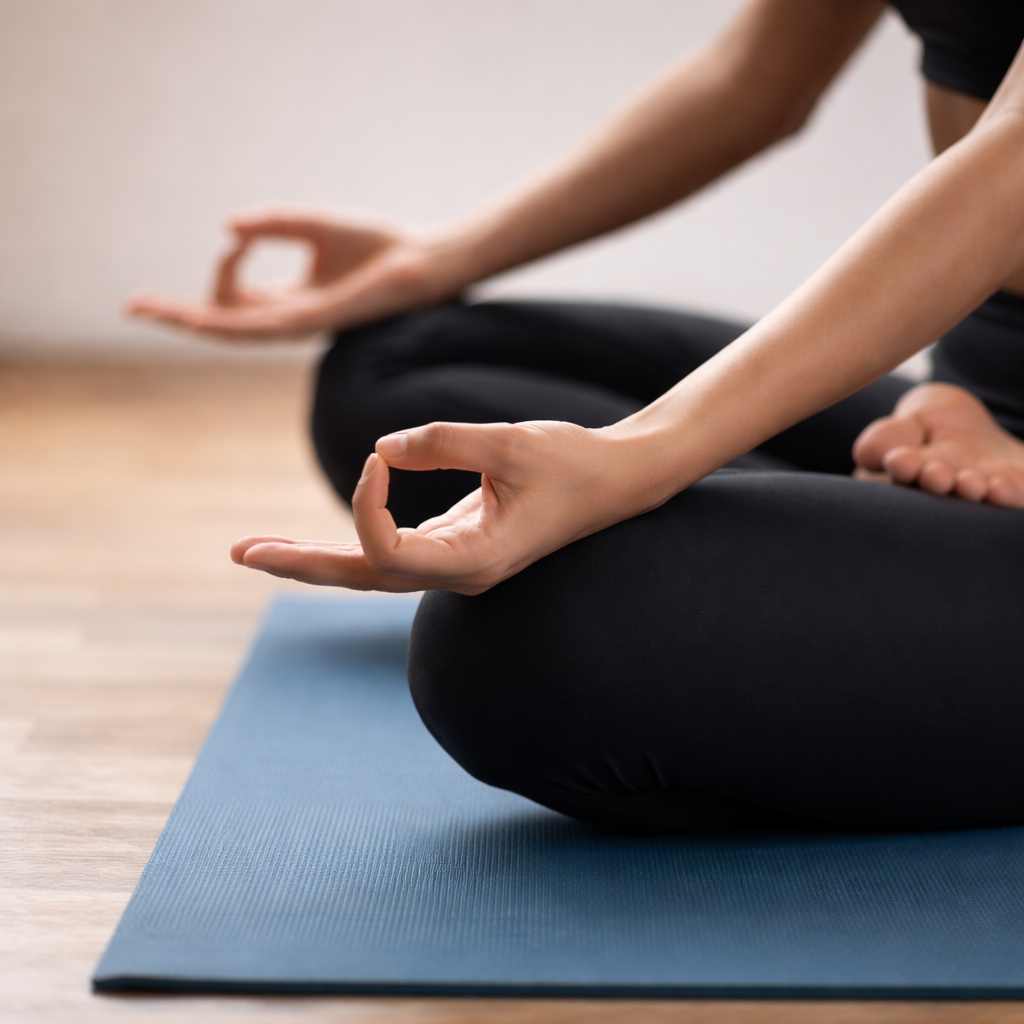
What to do with your hands is also entirely your choice. Having them on your knees is totally acceptable. Folded in your lap is also totally acceptable. If you prefer Hindu mudras, which are hand positions, you can do those as well. These are also about creating different energy channels in the body. Explore them all and see what feels right. I personally place my hands on my knees palm down.
As long as you have your hands in one fixed place, there won’t be fidgeting. Get comfortable and then hold that pose.
5. Sit on a Pillow
If you’re on the floor, a pillow under you makes sitting a little more comfortable. You’re still in the same position, still cross-legged on the floor or however you like, but with a little extra hip and back support.
6. When to Use Back Support
If the floor is causing a lot of stress and discomfort, making meditation unnecessarily challenging, then by all means, listen to your body and sit up against a wall or with a seat back.
What’s most important is creating a lasting habit. If the position becomes unbearable torture and pain, it’s not sustainable. Find what works for you and do that. Push yourself, but not too hard. If you listen to your body, your mind, and your heart, and you can’t go wrong.
But also remember, a lot of time, back pain has no physical cause. It is most commonly stress-related, and buried stress often comes to the surface in meditation. If we sit with the pain, if we notice that we usually feel fine throughout the day but the back pain only flairs up in meditation, then there is often a moment of realization that takes place that the stress was causing the pain, that the meditation helps release it, and we can break through into pain-free meditation.
Sometimes, the pain is just new back muscles being exercised that we’re not used to using. The meditation strengthens those muscles. So if you haven’t been in a serious injury or have some back condition, see what happens if you sit through the pain. Oftentimes, meditation is the beginning of the end for most common chronic pain conditions. Again, listen to your body and your inner wisdom first and foremost.
7. Head and Shoulders
Lift your shoulders, move them back, and then drop them down. You don’t want them tensed up by your ears. Relaxed is how you want them.
Align your head with your back. Keep everything in alignment from the lower back to the shoulders to the tip of your head. Everything in straight alignment. Not so stiff that you’re tense. Not so loose that you’re falling over.
It doesn’t have to be perfectly vertical if that’s difficult for you. As long as everything is relatively aligned and in good posture, then you’ve got nothing to worry about.
In the next article, we’ll explore and practice mantra meditation together.
The Meditation for All Challenge takes place in my newsletter, where I share:
• Weekly practices that accompany the reading
• Common difficulties and how to work with them
• Step-by-step instructions for meditation mastery
If you are reading this on the website, make sure you’re subscribed so you don’t miss the next step.
The Challenge Has Now Become a Book
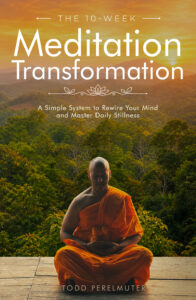
The full 10-week meditation journey, along with expanded teachings and answers to additional reader questions, is now available as
The 10-Week Meditation Challenge: A Simple System to Rewire Your Mind and Master Daily Stillness.
These 5 Minutes Could Shift Your Whole Week
Path to Peace Newsletter