
This article is part of the ongoing Meditation for All challenge. Subscribers to the free newsletter receive weekly guidance and a daily practice.
When starting out, sit however is most comfortable for you without dozing off. That may be a chair, the floor, or even in bed with your head propped up by a few pillows or leaning back against the headboard.
Keep your teeth slightly separated, and your jaw unclenched. You may rest your tongue where the front, upper teeth meet the roof of the mouth.
Over time, and if your physicality allows it, you may wish to sit in the more alert position of either full or half lotus pose, also known as Indian style. This position is done on the floor, on a couple of pillows if you like, with legs crossed and a straight back. Hands are placed folded in your lap or palms on your knees.
Some people prefer sitting on their knees with their heels against their bottom. This is also a fantastic position. Others enjoy placing their hands in certain positions known as “mudras.” These have been passed down for thousands of years and are believed to have certain energetic properties. The most famous of mudras is with the palm up and connecting the tip of the forefinger to the tip of the thumb.
There is no wrong sitting posture for beginners. Be sure to listen to your body.
Sit in a position that is comfortable to you. Don’t be too hard on yourself with your seating posture. You don’t have to sit on the floor in lotus pose. Be relaxed yet not too sleepy, alert but not tense.
Which Sitting Position Is Right for Me?
The answer to that is, whatever your body needs, whatever you feel comfortable with in this moment, that is right for you. No pressure, no stress. Meditation is about peace and releasing all that pressure, desire for perfection, and need to achieve.
There’s no wrong position. If you want to be a yogi superhero and sit in the lotus pose but it’s too difficult or painful, then work towards that slowly. But most importantly, do what is sustainable. Know your body and know your limits. Some days may be floor days, and some days may be bed days. That’s okay too.
One thing we have to remember is, as much as we want to sit in the perfect lotus pose with the soles of our feet facing up on top of our thighs and sitting on the floor with no pillows, it’s important to remember that people from the East are used to sitting on the floor all the time. Many Eastern homes don’t have chairs or tables.
In most parts of Asia, people sit on the floor, eat on the floor, and do everything on the floor, including cooking and chopping vegetables. So, sitting without a seat back is a comfortable position for them. They’re used to it.
Americans and Westerners, we’ve got back issues. We have a hard time getting on the ground and getting back up. This is one reason it’s actually a great practice to sit on the floor or crouch; it’s beneficial for the legs, back, hips, and maintaining mobility as we get older.
If you have issues sitting on the floor, it is absolutely acceptable to sit on a chair. If you feel called to sit on the floor, try it out. Begin by sitting on a pillow at first, or you can sit with your back against the wall. You can slowly progress to that perfect yogi, full lotus pose.
Listen to your body and trust yourself. You don’t want to add anxiety or stress to something like meditation. Be gentle with yourself; there’s no wrong way to do it. Just sitting down to meditate is already perfect. The posture you sit in, the length of time you sit for, how long you can focus on your breath or your mantra – those things are just the icing on the cake. Meditation is the cake.
Meditation is not about the outcome; it’s just about the moment. Just by sitting in meditation, you’re meditating perfectly.
Some people have injuries, and sitting on the floor is not for them. That is totally fine. Every single person on Earth can meditate. Don’t worry about the pose. Do what’s right for you. Mainly, try not to move or fidget. So keep your hands somewhere still, keep your mouth and tongue still, get comfortable, and then hold that pose.
Slowly, if it calls to you, you can move towards that perfect yogi pose. And I know you’ll get there if that’s what you’re striving toward.
Can I Meditate Standing?
What about while driving? Biking? Walking? Talking???
I’m sure you can meditate while standing. I’m not so sure you should.
Standing isn’t like sitting. We have to maintain our balance and make sure we don’t fall. Our body is constantly shifting, and we are constantly making little adjustments. We’re not really as still as when we are sitting still.
When we’re sitting firmly rooted on the ground, with a very sturdy base and posture, that stillness of the body translates into a stillness of the mind. It has a calming effect on its own. When we’re standing, we’re still using a lot more energy. We’re not able to allow our body to fully reach that rest, digest, and recover stage that it enters when it’s very relaxed because standing is a much more alert kind of position.
Standing, walking, talking, and everything else can become a meditation, but I highly recommend setting aside some time for undistracted sitting meditation. Sitting is that in-between state between lying down and standing or walking. That’s appropriate because meditation is that centered, balanced, middle path between alert and relaxed. You’re fully awake and aware, but you’re also in deep peace. Meditation trains us to approach all of life like that — whatever occurs, we can remain attentive to it yet stress-free.
Everything we experience in life falls under along the spectrum of happy or sad, love or hate, good or bad. But every positive has a negative — we cling to fleeting pleasures with longing and craving, or we fear and hate pain and difficulty. Peace, however, that deep inner joy and peace that comes from nothing at all, lies in the center. It has no opposite. It’s not neutral, it’s bliss without craving or attachment.
We can live at that center point of peace forever because there is no swinging back the other way for a balance to occur. It is balance. And that’s what gives the seated position its power — it is grounded, sturdy, and steady.
In meditation, you can only relax deeply into your practice when you have a strong base of support. It’s not so relaxed that you might fall asleep, but not too effortful that it disturbs your inner peace. In the seated position, you can let go completely without worrying about falling asleep, getting tired, or becoming drowsy (but if you do, that’s okay too).
While I don’t recommend standing meditation, I do recommend turning standing into a meditation. What I mean by this is, anytime you’re standing, whether in line at the store or talking to someone, observe your thoughts. Notice the nature of your thoughts.
Then bring your attention to your body. Expand your consciousness to your surroundings. Try to stay present like this for as long as possible, fully being where you are, undistracted by thoughts about the past, the future, or someplace else. It doesn’t matter if you’re someplace new or you’ve been there 1000 times. There’s always so much to observe in the present moment. No two moments are alike.
Remember, whether biking, driving, or walking, we can’t meditate the same as when we’re sitting with our eyes closed. We’re too busy making sure we don’t get hit by a car or bump into something. These activities can be very meditative, in that they bring us into the present moment and give our minds time to process our thoughts and experiences. But meditation is about taking away all external activity so that our mental activity has a chance to settle and rest in the present moment.
Sitting meditation trains our mind to be present so that we can go about the rest of our day with more presence and peace. The more we can set aside all mental and physical requirements, the more we can put our mental powers toward developing the skills of focus, insight, gratitude, awareness, concentration, pesce, and all the other amazing benefits that meditation produces.
In the next article, I’ll walk you through seven simple tips to improve your meditation posture.
The Meditation for All Challenge takes place in my newsletter, where I share:
• Weekly practices that accompany the reading
• Common difficulties and how to work with them
• Step-by-step instructions for meditation mastery
If you are reading this on the website, make sure you’re subscribed so you don’t miss the next step.
Can't Meditate?
Join the Meditation for All Challenge
We will all go through loss, heartbreak, aging, financial setbacks, disappointment, tragedy, loneliness, uncertainty, and fear. But we are never taught how to survive these challenging periods of our life.
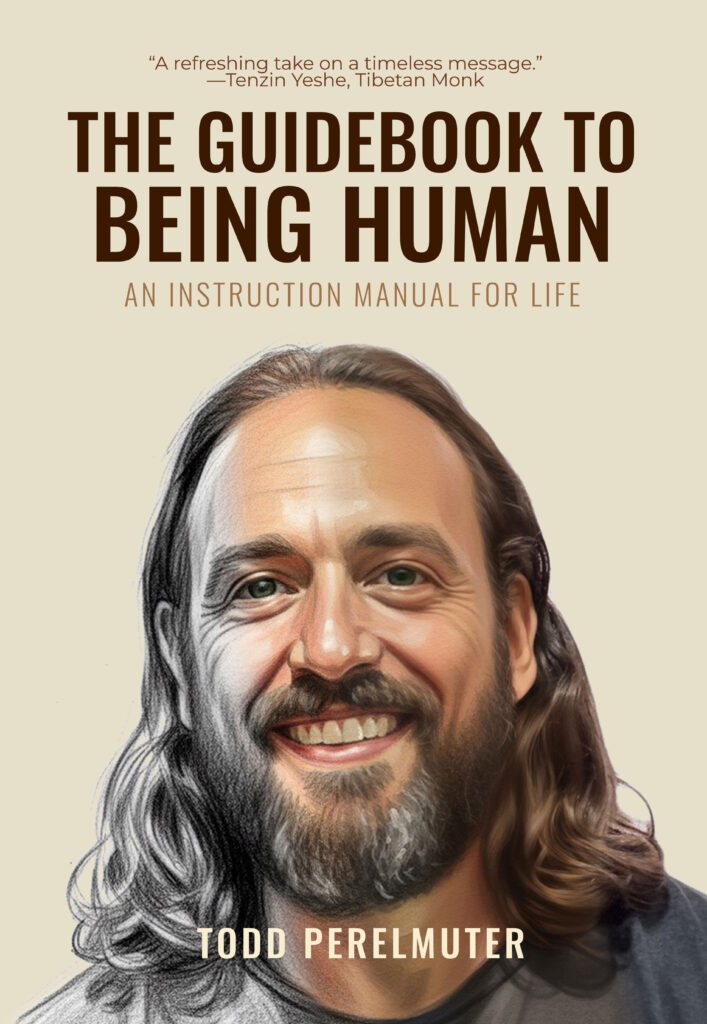
The Guidebook to Being Human: An Instruction Manual for Life, is Todd’s answer to the questions we all face. Now available on Amazon