
This article is part of the ongoing Meditation for All challenge. Subscribers to the free newsletter receive weekly guidance and a daily practice.
I was once telling my friend how I meditate, and he told me that sometimes he meditates with his eyes open. It never really occurred to me, but apparently, a lot of people meditate with their eyes open. I asked him, do you stare at a candle? I’ve heard of that. And he said, No, I just stare at a blank wall.
There are probably now thousands of different meditation techniques, each providing a different level of benefit and efficacy. There are very few negative forms of meditation. Some are less effective, while others excel at increasing your focus. Some may be deeply relaxing.
But there’s not just one way to meditate. There are many ways, and anything that helps you train your mind to be more peaceful, more joyful, more patient, more alert and aware, more focused and concentrated, more relaxed, more fulfilled, more in touch with your inner self is fantastic.
So yes, you can meditate with open eyes. For me personally, I find that closing your eyes is an incredible tool for turning your attention inward.
We all know, such as with one pupil, when you close your eyes, your other senses are heightened. I find it very beneficial that when you close your eyes, neurologically speaking, your visual processing center of the brain shuts down. The energy you spend there in that part of the brain can expand and broaden to other areas of the brain. So, by closing our eyes, we literally turn our attention inward.
We feel our body from the inside out, not from the sense of touching, but from another sense of just feeling, sensing. We’re able to use that attention that we would spend visually and turn it towards our thoughts, our mindset, our thought patterns.
And in doing so, we’re able to take a closer look inside the mind, understand the way it works, the way our thoughts appear and disappear, and how our stream of thought jumps from one almost random thought to the next. We’re able to feel our emotions more in depth.
The more we observe, the more wisdom arises, the more we understand the nature of the mind, the nature of our thoughts and emotions. This is why meditation has been referred to as becoming your own therapist because we have that wisdom, that ability to understand deep within us.
We just have to observe, just like in scientific pursuit when we study any phenomenon. All wisdom and understanding start with observation. We test and observe. And so, by taking a brief break from what we usually do, which is observing the external world for 99% of our waking life, if not more, meditation allows us the chance to turn our attention inward, to fully process our thoughts and emotions, to give our mind and body a chance to heal on a spiritual level.
For me, closing your eyes creates that opportunity to block out the distractions of the external world, to turn our attention away from the physical material world, and to observe a non-material, spiritual inner world and to reconnect with that deep source of infinite love and gratitude.
I don’t doubt that many people get great benefits from open-eye meditation. They likely develop a deep sense of patience and calm, as would come from sitting still without distraction. I’m sure they find great peace, solace, and benefit from that. I wouldn’t tell anyone not to do their favorite type of meditation.
For me personally, closing my eyes adds to the heightened sense of awareness of my inner self. Meditation, to me, is about closing out the outside world and turning inward. It’s a very profound way for me to achieve that.
I’m aware that some practices involve staring at a crystal or gazing at a statue of a god or some spiritual artifact that holds personal significance. Sometimes, people even close their eyes but visualize a god or a deity that most closely speaks to them. I think that is beautiful, and there’s a wonderful place for that.
But for anyone new to meditation or considering meditation, I would encourage them to try closing their eyes for two reasons:
- It creates a psychological connection in the mind, a subconscious, habitual reaction that when my eyes are closed, my meditation begins, my focus turns inward. It’s like an automatic habit that will happen. When we sit down and close our eyes, our body will instinctively know this is the time to meditate. This is the time to clear my mind. This is the time to relax and get settled into myself.
- Everything you need, you have, and all the strength and power any human has is within each of us. You don’t need a crystal, a candle, a statue, or even a blank wall. You are whole, complete, and everything you need for enlightenment, you were born with.
No matter where you are, no matter what situation you’re in, you can sit down or stand, close your eyes, turn your attention to your breath or your mantra, and connect with that eternal infinite consciousness, oneness with all that ever was, ever will be, and ever is.
Meditation is a simple, profound, and powerful practice. It has been passed on for thousands of years, with each generation handing it off to the next due to the enormous difference it made in their lives. It’s free, available to everyone, and can help us reconnect to our natural way of being. No religion has a patent or monopoly on it. It can change your life and the world. So, most importantly, give it a try. One or two minutes a day, add a little every week or two, and start experiencing those great benefits.
In the next article, we’ll talk: Why Doesn’t My Mantra Seem to Work? Do I Have to Change It?
The Meditation for All Challenge takes place in my newsletter, where I share:
• Weekly practices that accompany the reading
• Common difficulties and how to work with them
• Step-by-step instructions for meditation mastery
If you are reading this on the website, make sure you’re subscribed so you don’t miss the next step.
Can't Meditate?
Join the Meditation for All Challenge
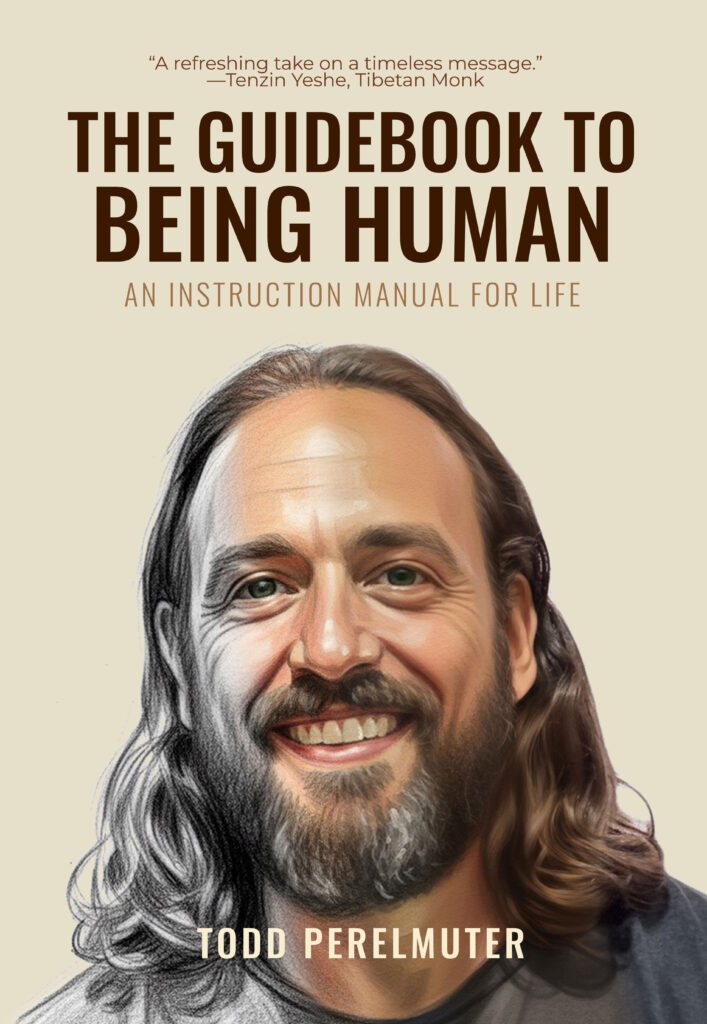
We will all go through loss, heartbreak, aging, financial setbacks, disappointment, tragedy, loneliness, uncertainty, and fear. But we are never taught how to survive these challenging periods of our life.
The Guidebook to Being Human: An Instruction Manual for Life, is Todd’s answer to the questions we all face. Now available on Amazon