This article is part of the ongoing Meditation for All challenge. Subscribers to the free newsletter receive weekly guidance and a daily practice.
There is no one best meditation, just like there isn’t one best medicine that treats every illness. Each meditation has its own benefits. For most people, a mantra helps calm the chaotic mind. After doing this for a while, moving on to breath-awareness meditation becomes easier. With heightened focus and concentration that comes from breath meditation, moving on to body scanning may be right for you.
For some, walking meditation, and more generally, turning every activity of the day into a meditation, may be best. Adding a loving-kindness meditation at the end of any meditation can also prove deeply powerful for opening our hearts to the world. Whatever works for you, do it! Play, explore, and have fun.
Whichever type of meditation you can do on a daily basis is the best for you. Whenever you can fit it in regularly is the best time of day for you. Think of it like exercise: a lot is good, but a little is better than none. And if you try to do much too fast, it may be unsustainable.
While different types offer distinct advantages, I believe in adopting a progressive approach to meditation. Begin with a simple and easy type; once your focus and awareness reach a certain level, progress to a more advanced practice.
Often, when people try a more advanced technique without first having the basics down, they give up. I certainly did numerous times. But since I stumbled upon this progressive approach, I haven’t missed a day.
Can We Switch From One Meditation Technique to Another?
It’s important to remember not to take meditation too seriously. But also, not too lazily. Balance is always found in the middle path. So in that spirit, feel free to play around and explore different types of meditation.
Some people are perfectly content and satisfied mastering the easier meditation practices and just doing that for the rest of their lives. Others wish to go deeper and explore further. Everyone is different and there is no one right way.
If you’re not seeing the benefits you’re hoping for, or if it feels difficult or stressful, a switch may be just what’s needed. Just make sure you choose methods with proven benefits and that are actually helpful.
Is It Okay to Practice More Than One Type of Meditation?
Learning to meditate is about more than just learning to sit still with your eyes closed. It’s about learning to be present and to see things as they really are. Our constant thoughts, judgments, and opinions are like a fog that obscures our view of reality.
The more we meditate and the more aware we become of our thoughts, the less we unconsciously and incessantly think. This lifts the fog, and we begin to experience all of life with peace, wonder and joy.
The more we turn our attention inward, the more we see how our own mind works. We become experts of our own psychology and we stop generating mental suffering. Our focus, patience, and mindfulness increase, and we start generating greater love, purpose, fulfillment, and compassion in our lives.
So, the answer to the question is absolutely. Obviously, beginners are going to have less ability to perform more difficult meditation types, so it’s only natural to progress in your practice, change things up, and try new things.
Next week we will talk about why your meditation is not showing results or if you are meditating wrong.
The Meditation for All Challenge takes place in my newsletter, where I share:
• Weekly practices that accompany the reading
• Common difficulties and how to work with them
• Step-by-step instructions for meditation mastery
If you are reading this on the website, make sure you’re subscribed so you don’t miss the next step.
The Challenge Has Now Become a Book
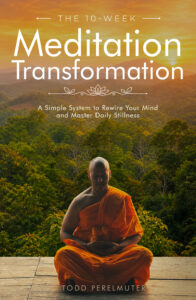
The full 10-week meditation journey, along with expanded teachings and answers to additional reader questions, is now available as
The 10-Week Meditation Challenge: A Simple System to Rewire Your Mind and Master Daily Stillness.
These 5 Minutes Could Shift Your Whole Week
Path to Peace Newsletter