What are Mindful Mondays
Mindful Monday is a concept that encourages people to start their week in a mindful and intentional way. It’s a day where people can take a moment to slow down, reflect on their priorities, and set their intentions for the week ahead.
Recommended reading: How to practice mindfulness at work
Some people may use Mindful Monday as an opportunity to meditate, practice yoga, or engage in other mindfulness practices. Others may simply take a few minutes to breathe deeply, journal, or engage in other activities that help them connect with themselves and their goals.
The idea behind Mindful Monday is to start the week off on a positive note and create a sense of calm and focus that can carry through the rest of the week. It’s a reminder to slow down and be present in the moment, rather than getting caught up in the stress and chaos of daily life.
How to Organize Mindful Mondays at Work
Organizing “Mindful Mondays” at work can be a great way to promote mindfulness and well-being among employees. Here are some steps you can follow to get started:
- Set a specific date: Choose a specific Monday each week that will be dedicated to mindfulness activities. This will give employees something to look forward to and help them to make mindfulness a regular part of their routine.
- Create a plan: Decide on the specific activities you want to incorporate into Mindful Mondays. This could include guided meditation, yoga, mindfulness exercises, or other similar practices. Consider partnering with local wellness professionals or hiring an instructor to lead these activities.
- Promote the event: Make sure employees know about Mindful Mondays by sending out emails or creating posters around the office. Encourage everyone to participate and let them know how these activities can benefit their mental health and overall well-being.
- Provide a quiet space: Set up a designated area for employees to practice mindfulness on their own if they wish. This could be a quiet room or a designated area where they can go to meditate, stretch, or simply take a break from their work.
- Evaluate and adjust: After a few weeks, evaluate the success of Mindful Mondays by gathering feedback from employees. Use this feedback to adjust the activities and make any necessary changes to ensure the initiative is meeting its intended goals.
What to Avoid During Mindful Mondays
During Mindful Mondays, it’s important to focus on activities that promote mindfulness, relaxation, and stress reduction. Here are a few things to avoid during Mindful Mondays:
- Multitasking: Multitasking involves trying to do multiple tasks at the same time, and research has shown that it can increase stress levels and decrease productivity. During Mindful Mondays, it’s important to focus on one task at a time and be fully present in the moment. This can help employees reduce stress, improve focus, and increase productivity.
- Checking Emails and Notifications: Constantly checking emails and notifications can be distracting and take away from the mindfulness experience. During Mindful Mondays, encourage employees to turn off their phones or put them on silent. This can help them fully engage in the mindfulness activities and experience the benefits of reduced stress and increased focus.
- Negative Self-Talk: Negative self-talk involves criticizing or judging oneself, which can be detrimental to mental health and well-being. During Mindful Mondays, encourage employees to avoid negative self-talk and instead focus on self-compassion and self-care. This can help them reduce stress and improve their mental health and well-being.
- Rushing: Rushing from one task to another can be stressful and counterproductive. During Mindful Mondays, encourage employees to take their time and move at a relaxed pace. This can help them reduce stress and improve their overall well-being.
- Judging: Mindfulness is about being non-judgmental and accepting of thoughts and feelings as they arise. During Mindful Mondays, encourage employees to avoid judging themselves or others. This can help them cultivate a sense of acceptance and non-judgment, which can be beneficial for reducing stress and improving mental health and well-being.
By avoiding these things during Mindful Mondays, employees can fully engage in the mindfulness activities and experience the benefits of reduced stress, increased focus, and improved well-being.
Why Would You Need an Expert Meditator For Organizing Mindful Mondays
A meditation teacher can be a valuable resource in organizing Mindful Mondays at work. Here are a few ways a meditation teacher can help:
- Develop a Mindfulness Program: A meditation teacher can help develop a program that includes various mindfulness techniques such as meditation, deep breathing, mindfulness-based stress reduction, and more.
- Conduct Mindfulness Workshops: The teacher can conduct mindfulness workshops to teach employees the benefits of mindfulness practices and how they can be incorporated into their daily lives.
- Customize the Program: The teacher can customize the program to meet the unique needs of the company and its employees. For example, if employees work long hours or have high-stress jobs, the teacher can focus on techniques that specifically help reduce stress and increase focus.
- Provide Ongoing Support: The teacher can provide ongoing support and resources to employees to help them continue their mindfulness practices beyond Mindful Mondays. This could include guided meditations, reading materials, and other resources to help employees develop a regular mindfulness practice.
Why Employees Need Mindful Mondays & Meditation, Not Just Happy Hours
When organizing Mindful Mondays, companies often ask why a structured wellness initiative is necessary when social events like happy hours already exist. These days, employees are thinking not just about ways to let off steam. They’re thinking about ways to let go of their stress that won’t leave them hungover, tired, groggy and unhealthy. That’s why more and more employees are looking for healthy ways to improve their lives, not just their nights. And it’s why employees need meditation more than company happy hours.
Recommended reading: How to build self-discipline with meditation
The Benefits of Corporate Meditation for Employees
When we let off stress in healthy ways, such as meditation, we are actually able to focus better. It increases productivity and creativity. This makes work easier, which ends up making us less stressed about work in the first place.
When companies start meditation programs, employees’ lives can improve dramatically in every aspect. From better relationships to more gratitude, peace, and joy. And as we all know, happy workers are better workers.
The Benefits of Corporate Meditation for Companies
Corporate meditation is a win-win for businesses and workers alike. Yes, productivity goes up and turnover rates go down. But that’s just the start.
It’s been proven that costly mistakes go down, people work together better, and fewer HR incidents occur. This is because when people are more mindful, they are more conscientious of their actions and their words. This is more important today than ever before.
The Problem with Company Happy Hours as a Workplace Perk
While some companies are looking for ways to entice workers back into the office, happy hour and free drinks is often their first go-to idea. The problem is, the happiness from happy hours doesn’t last beyond the hour.
The next morning and day can be grueling. Some people can do regretful things during happy hour. And some people who don’t drink can feel left out and isolated. Everyone, however, can meditate.
When drinking occurs the night before, this actually leads to less productivity and more costly mistakes. Absenteeism goes up and it encourages a sense of work being a stressful place worth escaping from through vice, rather than incorporating as part of a life well lived.
Why Companies’ Real Happy Hour is an Employee Meditation Class
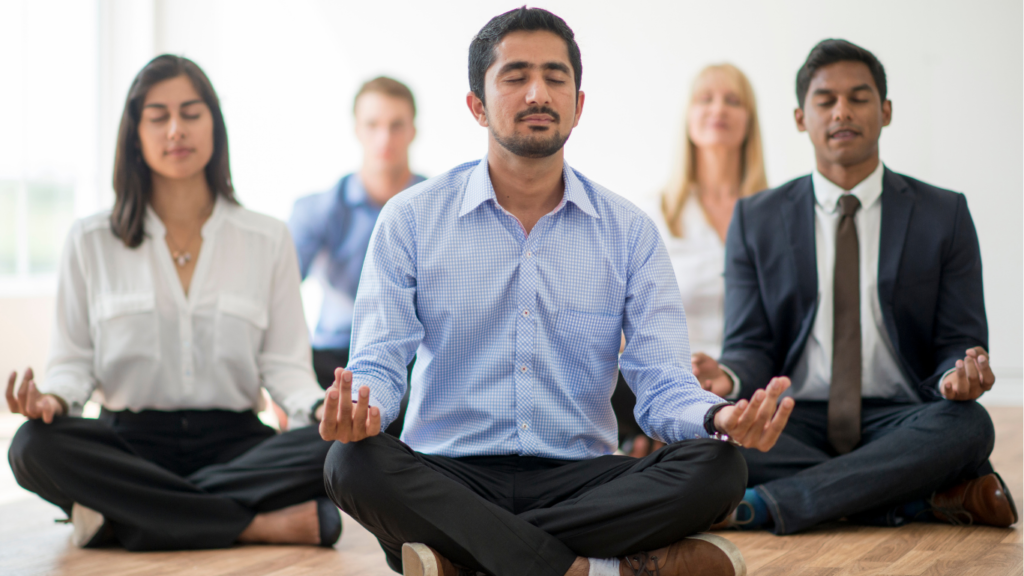
Bringing a skilled meditation teacher into your company creates the same kinds of employee bonding as happy hour, but on a much deeper level. From introverts to extroverts, from drinkers to non-drinkers, everyone can bond over this beautiful practice that can improve everyone’s lives.
No matter anyone’s religious views, cultural or racial backgrounds, the practice of meditation can increase the inner joy and peace of every employee so that everything else they do, whether it’s work, family or fun, becomes improved as well.
When companies start corporate meditation programs, employees become excited to go to work. They become eternally grateful that their company cares about their well-being, not just their liquor consumption.
In the days since the pandemic began, workers have taken a closer look at their lives. They don’t want to just feel good now. They want to build a life they can feel good about. Meditation helps them do just that and it’s why employees will always need meditation more than companies’ happy hours.
Every Question About Meditation, Answered

Written by a former Creative Director at Manhattan’s top agency who walked away to study under monastics across Asia. This comprehensive guide answers every question on meditation, breaking down high-stress modern life into lasting inner peace.