“Know thyself” is one of those ancient spiritual bits of wisdom that most of us have heard. And no one else can give you the answer to that question of who are you. That is something each of us has to do for ourselves — to close our eyes, turn inward, and spend a significant amount of time understanding who we are, ever-changing in this ever-changing moment.
What is the nature of this life that we are?
A helpful starting point is to understand who we are as a species. Because we are not so different. We are more alike than we are different. So what does it mean to be human? What separates us from other species? What makes us unique? And what can we learn about who we are from understanding who we are as a species?
We know that something makes humans vastly different from all other animals, and yet we are also so similar. We have language. We have consciousness. We have faces that can see and hear, eyes and brains. But we can tell that something different is going on.
What is it? Where does it come from? And what makes us so unique and special?
What is our human nature that we are unaware of, that causes us to live in confusion, doubt, and uncertainty, and gives rise to so much insecurity? What can we learn from looking at our species about how we should live our lives, what it means to live in alignment with our true nature, and how we can live in a way that is most beneficial to our well-being, our happiness, our mental health, and our physical health?
When a species lives in alignment with its true nature, when it eats what it’s supposed to eat, rests the amount it needs to rest, has an activity level that matches its physical needs, and has a social life that fulfills it, there is no mental illness. There is no chronic disease.
So what are we doing wrong?
We do not have to go back to living in tribes, living in the forest, living like ancient humans. We have evolved. We have incredible technologies. But like any tool, like a power drill, we can use it to build a house, or we can use it to injure ourselves.
So how can we use technology, innovation, modern luxuries, and comforts in a way that doesn’t destroy our health, our mental health, our joy, our well-being, and our love for life? How can we thrive the most?
The answer truly lies in understanding what it means to be human.
This is a topic I cover in great depth in my newest book, The Guidebook to Being Human: An Instruction Manual for Life, available on Amazon. But first, let’s explore what makes humans so different.
The answer is that men and women alike have an explorer mindset. We are adventurers. We are curious. We are the only species to move out of our natural habitat and find ways to exist on every continent on the planet, something no other species has done.
We embraced the great unknown. We sailed into oceans just to see what was on the other side of the horizon, even believing we might fall off the edge of the world. And yet, we took those journeys.
Because of this exploratory, adventurous mindset, we have evolved faster than biology. Every generation makes life newer and better for future generations. We brave the unknown for the chance to create a better future.
Just because we now have Google Maps and have mapped the entire Earth does not mean our days of adventure are over. We are exploring the stars. We are exploring endless information, hobbies, experiences, people to meet, and stories to learn.
And no journey, no adventure, is more fascinating than the journey inward.
To explore our own minds. To observe the nature of consciousness. To feel what it is like to inhabit this body. Beyond what we touch, beyond the sensations on our skin, what is the sensation of being human?
What are our beliefs? What identity have we picked up and adopted? What mental habits have we developed?
And beneath all mental activity, beneath our emotions, our feelings, and everything we perceive—what is left? What is there at the core?
This is the most important journey we could ever take. It is lifelong, always changing, and never-ending. And we often forget that we have access to infinite space within us — for free. No rocket ships needed.
Yes, one day we may travel into outer space. But we can already travel into infinite space within us. Because that same infinite space exists inside. When we close our eyes and quiet the mind, we discover that same depth pointing inward. As above, so below.
The unexamined mind is not worth having.
If we constantly react habitually, operating from patterns and conditioning, we can never be free human beings. We become the result of generations of conditioning. But when we become aware of these mental habits—when we understand who we truly are at our core—we can make conscious decisions. We can be free.
Free from insecurity and doubt. We can sense the infinite within us. We can sense the oneness that connects us to the universe. We can break the chains of unconscious habits.
Life stops being an unconscious reaction and becomes a conscious choice for the first time.
We are the only species capable of breaking free from stimulus and response. From A or B. From seeking reward and avoiding punishment. From being rats in a maze chasing cheese and avoiding electric shock.
We can simply be in peace.
We can break free from carrot-and-stick conditioning. We can realize that the things we stress, panic, and worry about are not worth that suffering. We can still avoid pain. We can still seek pleasure. But there is no need to be consumed by stress, panic, craving, obsession, or resistance.
We can turn sticks into carrots. We can turn electric shocks into cheese. We can make peace with all of it.
But only when we turn inward and explore the depths of our nature, until we reach that center of peace and oneness. We begin to realize that we create stress, fear, anxiety, longing, and desire. It’s never the stuff. It’s never the situation. Automatic thoughts are not the truth. Conscious, intentional awareness, coming from our higher self, is closer to truth than the thinking mind trapped in the past and future.
We often believe that circumstances determine our happiness. But we see clearly that someone can have everything — wealth, success — and still be miserable, suicidal, anxious, and lonely. And others with very little can have deep inner peace.
Two families can sit at the same dinner table, looking at the same bills, facing the same expenses, and one suffers deeply while the other remains calm and grateful.
So what’s the difference?
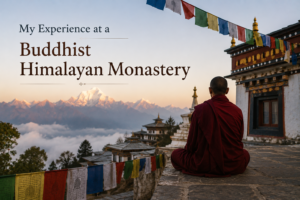
I once asked a Buddhist monk, “What kind of life does someone who lived a good life choose next?” He told me, “A good person gets parents who teach them meditation.”
That made sense. Because suffering exists in every life. But meditation gives us the ability to sit with suffering in peace.
For most of human history, we lived without distraction. We sat. We rested. We lived in accidental meditation. Even Jesus went into the desert for forty days and returned with teachings on love and the kingdom within.
So don’t forget to look inward as much as we look outward. Trust the wisdom within you. Explore the world. Explore your beliefs. Release the ones that harm you and strengthen the ones that uplift you.
You are an adventurer. Explore with presence. Balance movement with stillness. Protect quiet moments. Sit on the porch. Look out the window. Connect with nature.
The more we do this, the more peaceful we become—and the more peaceful our world becomes.
These 5 Minutes Could Shift Your Whole Week
Path to Peace Newsletter