
This article is part of the ongoing Meditation for All challenge. Subscribers to the free newsletter receive weekly guidance and a daily practice.
A mantra trains our mind in the lost skills of focus, patience, and concentration. It puts us in a very relaxed state that de-stresses us and provides many health benefits.
Some people will find it difficult at first. When we’re used to constant stimulation, constant doing, and constant distraction, sitting and focus will naturally feel boring at first. We can wonder if it’s the mantra’s fault, if meditation is B.S., or if it’s just not for us.
However, if you decide to do the mantra, and you do that consistently for the rest of your life, you will experience immense benefits. Within a year, you will wonder how you ever lived without it. That has been my experience and countless others. It is a law of nature — right effort and right action leads to the positive change.
Meditation is a very simple but powerful practice, and we don’t need to add pressure or expectations to it. It does take time, but that’s why it teaches us patience. From patience comes peace, and from peace comes bliss. Keep it up, and you will surely find it.
Get rid of your expectations. Toss them out the door. You don’t need them.
We’re so used to putting expectations on ourselves in every aspect of our lives, and we are very hard on ourselves. We expect perfection from ourselves. We want to measure our achievements and goals, and track our progress.
But in meditation, we put all that aside and simply be. It’s a radical concept, and so it is important to be aware of our old thinking habits. Thoughts like, this is pointless, this isn’t doing anything, I’m not doing it right, I’m thinking too much, I need a better mantra…
Those thoughts will be there, but they don’t need to be listened to. Don’t follow them. Just allow whatever comes in any moment. Allow it to stay as long as it wants. And allow it to leave whenever it’s ready. Accept whatever arises, know it’s temporary, and accept this moment fully. That is peace.
In meditation, as in life, we simply allow what is to be. By not resisting the universe we create peace. We can still act to change things. That is accepting our ability to create change. But we don’t have to hate the way things are, our obstacles, or journey of change. That will only make us miserable.
And so we practice acceptance everyday in meditation. We accept the sometimes hard challenge of making it a consistent habit, everyday, at the same exact time, without missing it no matter what. That is all we have to “do.” After that, we just have to “be.”
If a mantra feels hard, change it. Play with it. Keep it as fun and light as possible. “Choose the path of least resistance,” one monk told me. “Peace, peace, peace” is a great mantra. But remember, it’s not really about what the mantra is. The mantra is a simply an anchor for your mind. It is just a sound to keep your mind focused and still. Like a net that catches a wandering mind. All that matters is whether you use it or not.
It doesn’t matter if you meditated for 10,000 hours if you haven’t done it for 30 years. You have to do it every day. If you want steady and ever growing peace, if you want to get off the rollercoaster of chaos, this is the way. Every single day you will be nurturing your ability to experience more and more joy. Every day will be the greatest day of your life because you deepened your capacity for peace, joy, and love for life.
So make it a habit. If you fall off the horse, it’s not about how hard you fell. It’s about how quickly you get back up.
So many people try meditation, and if they can’t sit still for an hour without thinking, they think it’s not for them and they quit. I don’t know anybody who can go an hour without thinking, not even the longtime Buddhist monks I know.
So just try just 5 minutes. 1 minute. Even 30 seconds at first, but make it stick. Progress over time.
Don’t be too hard on yourself. Don’t be too easy on yourself.
Take that middle path. That is where peace lies.
Many people experience unusual sensations in the body while meditating. In the next article, we explore why this happens and what it may mean.
The Meditation for All Challenge takes place in my newsletter, where I share:
• Weekly practices that accompany the reading
• Common difficulties and how to work with them
• Step-by-step instructions for meditation mastery
If you are reading this on the website, make sure you’re subscribed so you don’t miss the next step.
The Challenge Has Now Become a Book
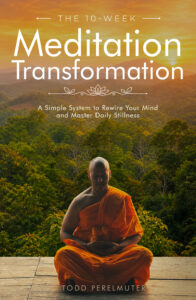
The full 10-week meditation journey, along with expanded teachings and answers to additional reader questions, is now available as
The 10-Week Meditation Challenge: A Simple System to Rewire Your Mind and Master Daily Stillness.
These 5 Minutes Could Shift Your Whole Week
Path to Peace Newsletter