
This article is part of the ongoing Meditation for All challenge. Subscribers to the free newsletter receive weekly guidance and a daily practice.
The only wrong way to meditate is to not meditate. Some types of beginners’ meditations have certain benefits and more advanced types have different ones. But if you take the time to turn your attention inward, you will have more peace and gain a deeper insight and understanding into the nature of your mind, who you are, and even the world around you because all understanding starts with understanding yourself.
It’s so important to take care of your mental health because a peaceful mind is the first step to reaching your full potential. Just a few small, simple daily habits can lead to a significant change in your personal, professional, and spiritual life.
Meditation is our natural state of being. It is a state of being totally present and alert. We are mindful of ourselves and our surroundings. It is a state of complete inner peace and joy.
The practice of meditation is a simple, easy practice where we spend a few minutes being present and alert by turning our attention inward and focusing on our breath, our body, or a mantra.
Meditation is an antidote to modern life. More and more people are beginning to understand this. Most of the world is now either planning to shift or has already shifted to this divine and magical world of meditation.
Many people ask me if there’s a wrong way to meditate. I always have to laugh just a little bit, but then I always answer the same: meditating is like going to the gym —a little is better than none, some types are more beneficial than others, but as long as you don’t overexert yourself or do too little, you’re going to get amazing benefits if you keep it up.
That said, different kinds generate different results. There are pros and cons to everything we do and meditation is no different. Some are easy. Some are hard. And oftentimes, it’s hard just to get started.
Why Is It So Hard to Meditate?
We all have decades of thoughts, experiences, and traumas bottled up inside of us. Early humans spent most of the day observing and thinking, some of the day socializing, and that was it. There were no phones, TVs, radios, newspapers, books, boardgames, or office jobs. While hunting, foraging, building shelter, raising kids, and relaxing, we were just observing and thinking.
Today, we don’t have much time for observing and thinking. Our minds are near constantly consumed with other things: chores, work, plans… Or, we spend massive amounts of time zonking out our mind with other people’s thoughts — shows, movies, literature, phones…
Because of this, we don’t really process anything that happens to us. We don’t adequately reflect or heal. So when we sit down to meditate, a massive backlog of neglected thoughts and feelings can come pouring out. This can feel very difficult at first. It can be why sitting still for long periods of time can feel torturous. But it’s not the meditation’s fault. It’s revealing why the meditation is so badly needed.
Luckily, not all meditations are equally difficult. Here are some of the easier ones that can help get any novice started. Explore around and find the one that feels the most peaceful. That’s your body gently whispering to you.
Guided meditation is the easiest style of meditation. It typically consists of beautiful music and a voice that guides you to focus on something you wish to improve. You can think of guided meditation like hypnotherapy. You’re in a deeply relaxed state as a soothing voice guides you towards healing and self-improvement.
While it can be incredible for dealing with specific issues, it is not quite the same as traditional meditation. Traditional techniques allow for introspection and self-examination. In this way, we’re able to be our own therapist. It helps us become more conscious of our thoughts and emotions, and consciously let go of negative feelings.
If traditional meditation is too difficult, absolutely give guided meditation a try. Try to find ones that provide plenty of silence as well as guidance so you get the best of both worlds.
Mantra a perfect style of meditation for beginners. Just as the Buddha said to always take the middle path — the path that’s not too easy, not too hard — this style provides a very pleasurable experience and it allows you to achieve that all on your own. All while producing all the amazing benefits of focus, peace, and discipline.
To practice, simply choose a mantra. I recommend “Om” because it has no particular meaning to get hung up on. This way it can mind can easily become clear and free. But it can be anything. Then, repeat the mantra in your mind for 5, 10, 15, or 20 minutes. You’ll know what is right for you.
Try to only use the mantra when sitting in meditation and not randomly throughout your day. This will build muscle memory in your brain so that it knows when the mantra starts, the meditation has begun.
What Am I Doing Wrong? Why Can’t I Meditate?
No one expects that they can just grab a scalpel and start cutting someone up with no medical training and hope to be an expert surgeon. Yet, many people think if they sit down to meditate, they should be an expert right away. At the first sign of discomfort, a wandering mind, or a disturbing emotion, they think they can’t meditate and that meditation is not for them. Quite the contrary! All of these are just signs that they need to meditate and are merely normal beginners.
The truth is, literally every single person can learn to meditate. All it is is sitting still without distraction, the easiest thing in the world. Often, people who “can’t” meditate are able to run marathons and regularly do many other very difficult things, but they have a hard time sitting still.
Negative emotions and thoughts that haven’t been fully healed rise to the surface when we first sit for meditation. Some people mistakenly take that as a sign that meditation caused the emotions. However, this is what the healing process looks like and it is a sign that meditation is needed and working.
To understand what happens to the mind and body in meditation, we first have to understand the nature of the mind and body.
First off, there is no separate mind and body; they are directly related. A psychological experience can trigger a physical response. Many are familiar with stress leading to high blood pressure, a faster heart rate, and a higher body temperature. But there are countless more physical manifestations that occur as a result of psychological changes, such as panic attacks, nervous tapping or fidgeting, twitching, shortened and choppy breaths, breath-holding, deep sighs, perspiration, blushing cheeks, chronic pain, arousal, and so on.
When we meditate, the mind, or the “thinking mind” to be more precise, tends to only see things in terms of instant gratification. Its job is to get what it wants as fast as possible — food, warmth, shelter, and pleasure. It can best control us to do its bidding if it convinces us that it is us.
But we also have a higher mind beyond thinking — the sensing, intuitive, higher intelligence. Because the thinking mind desires instant gratification, meditation becomes incredibly threatening to it. The thinking mind, or ego, has been in control for most of our lives, ever since we started to believe the voice in our head was who we truly are. And so, we began to listen to those thoughts and give great credence to them.
Once the identification has begun, we tend to become pleasure seeking, instant gratification machines. We start to develop a lifelong habit of suppressing and stuffing down feelings — usually unconsciously and at times consciously — through behaviors such as overeating, over working, excessive shopping, social media, entertainment, drinking, and so on. By diverting our attention elsewhere rather than dealing with and healing from the traumas we may have experienced, all the feelings that have been suppressed — including anger, sadness, anxiety, painful memories, and disturbing thoughts and feelings — can come to the surface like an explosion in the stillness of meditation.
Meditation doesn’t creating these physical, emotional, or psychological responses. Meditation creates the space for these long-suppressed feelings to finally emerge and be processed for healing.
When we first meditate, people describe all sorts of physical symptoms — it could be their head shaking back and forth, eyes rapidly moving, tightness in the chest, any kind of twitching, or extreme fidgeting (me!). These are all very common ways that the body heals from trauma, ways that we often don’t allow ourselves to work through.
Many animals who’ve suffered a traumatic experience in the wild have internal mechanisms to burn off the excess adrenaline they’ve just released. Humans have similar mechanisms. Adrenaline pumps through our veins because our body thinks we’re going to burn off the adrenaline by running away from danger or fight a bear. But sometimes, when no physical exertion is required, we may shake uncontrollably, break down and cry, or even engage in laughter. Laughter, in particular, is one of those automatic responses that involves our entire body, raises our temperature, and acts as a relief valve for trauma.
When we experience discomfort or disturbing feelings in meditation, it’s important not to resist them, not to fear them, but to look lovingly and learn. In this way, we allow whatever arises to be, even if it’s panic, anxiety, or stress, because we can’t fight them.
When we fight them, we create more stress, more tension, more conflict within us. We don’t resist it, go along with it, or believe it.
Instead, we just bring awareness to it. We simply allow it to be, and by becoming aware of it, by allowing it with no negative resistance, we create a space of peace and acceptance around it. This is how any kind of negative feelings can be healed and processed through meditation. They are a sign we should stop meditating; they’re a sign we should keep going.
I Feel Sleepy During Meditation. What Can I Do?
The human mind can really only be in two states: peace and agitation. Agitation doesn’t necessarily mean negative — it simply means excited, active, or stirred up. That agitation can be anything from anger, sadness, and hatred, to excitement, passion, and desire. It’s whenever the mind is going, going, going.
Peace, on the other hand, is calm, quiet, and settled. It can still be focused, but it is focused on just one thing so the mind becomes very still. Peacefulness can range from carefully and closely observing something like a flower, to being fast asleep.
When we meditate, we notice the mind move between these two states — agitation and peacefulness. The goal of meditation is to be as alert and peaceful as we can be, right up to the edge of agitation, which is right in the middle between excited and asleep. We don’t want to so relaxed we forget to focus on our breath or mantra, and we don’t want to get overly excited and stimulated that we get fidgety and restless. We want a balance: alert, awake, and aware, but also relaxed and restful. Not in either extreme — neither heavy emotions or mental overactivity, nor dozing off and drifting away from the present moment.
There’s sleep on one side and mental sprinting on the other. What we want is that middle path: balanced, peaceful, centered, and grounded. This is the way to live. It’s how humans evolved to live.
In the wild, we needed to be alert for dangers and predators, but we also couldn’t live in a state of chronic stress that weakens our health and hurts our community. We needed to be present to survive, and all that mattered was this moment. There was no calendar, no days to look forward to, no pictures of the past. There was only now.
So, how can we rediscover this primal state of being?
When we get sleepy during meditation, one very effective thing to do is to sit up a little straighter. Physically straightening the spine is a great way to address internal sleepiness.
Try breathing a little deeper and raising your gaze a little higher. When your eyelids feel heavy and your eyes drift downward, simply raising your eyes (even if they’re closed) can help wake you up.
Another way is to think of something delightful, like universal love. Meditate on universal love and compassion for others. Embody compassion by thinking of loved ones, people you care about. Feel that warmth you have for them and allow your mind to go to that place of pure love, and radiate it outward. Visualize your heart like a glowing ball of light, expanding and expanding.
Or, with each breath in, visualize white, radiant energy filling you up and expanding even further. With each breath out, visualize black smoke leaving your body — containing your laziness, your stress, your worries, and your tiredness. Inhale healing love. Exhale what no longer serves you. And continue until you feel that bright energy of the sun energizing you.
When your mind is overly agitated — thinking too much or consumed by strong emotions — try lowering your gaze, relax your body more, slow and soften your breathing, and turn your mind toward something dulling, like the impermanence of everything. Visualize time passing and everything and everyone on Earth decaying and fading away. Let your thoughts and worries dissolve with this passing of time until there is only space and stillness.
Let the mind settle into this flow. Practice walking that tightrope of peaceful awareness. When you start to lean over too much to one side, bring yourself gently back to the center.
These are some great techniques for staying on the middle path. And when your mind wanders, notice what made it wander. As you advance, start to notice the thoughts as they’re coming — before they distracts you. Then, put a little more effort into your breath or mantra, and that will help you stay centered and extend those moments of bliss — that still, quiet peace we all have within us.
We just need to let go of what we’re clinging to in order to experience it.
How Can I Get My Mind to Fully Embrace Meditation?
Often, when we first try meditation, our mind becomes the biggest obstacle. It bombards us with reasons to stop, tries to distract us throughout, and incessantly thinks about what we’re going to eat later or what tasks await us. The mind feels threatened when we attempt to quiet it during meditation.
So how do we use our mind to help us meditate? We can’t simply ignore our mind, because the thoughts will get louder and louder. We can’t force it not to think about a certain thing, because it will only fixate on that thing. But there is a way to work with our mind.
It is only natural, especially during the initial stages of meditation, that our mind screams, “Please stop! Do anything but this! This is pointless. I hate this. I’m so bored.” These are very common reactions. It’s understandable that the ego wants to be in charge and does not want to be silenced.
If we want our mind to embrace meditation, the best way is to let go of the need for our mind to embrace meditation. In meditation, our goal is to gain control over the mind and reclaim our freedom, focus, awareness, and concentration.
It’s about letting our higher self, which always knows what’s best for us, choose what we focus on and concentrate on. Our mind is a thinking machine, and it may think chaotically. However, we don’t have to obey to it. Instead, we can put all of our attention in the present moment, where everything happens anyway. In this way, the mind becomes just background noise like the humming of a refrigerator.
We don’t have to identify with, and attach ourselves to, every whim, thought, and nonsense that it says most of the time. The best thing to do is just watch it, pay attention, and notice its tricks. Being extra aware of what it is trying to do and say prevents it from being able to control us subconsciously.
Bringing awareness to the mind brings your higher intelligence into play. Instead of your intentions being out of alignment with your thoughts, words, and actions, everything starts to line up perfectly. Your higher consciousness takes control back from the ego. When you say, “I’ll quit X… I’ll finish Y… I’ll start meditating…” now you actually will. Those are the sentences coming from our higher self. It’s the ego that sabotages us with temptations and fears. With a little mindful observing, those thoughts will start to appear like a third rate carnival barker – ineffective and not worth buying into.
More important than not listening to the mind is redirecting the mind. What we really want our mind to do is to help us stay motivated so we can maintain our consistency. To achieve this, don’t overly focus on each practice or on the day-to-day results. Some days may be peaceful and easy, while others might be more challenging. Instead, focus on your motivations and reasons for meditating. They remain constant.
It’s easy to get discouraged if you’ve had a great meditation session followed by a few hard ones. One day you may be celebrating that you didn’t lose your temper at something you normally would have, and the next day something makes you snap or break down. However, meditation is particularly valuable during those hard moments. It’s crucial to continue practicing during challenging times, as it helps you navigate and overcome them.
Instead of solely concentrating on the meditation experience itself, keep your attention on your motivations for practicing meditation. What are your goals and aspirations? Who do you want to be a better person for? These factors serve as powerful motivators. Remember, meditation is about our entire life. It’s not about sitting down; it’s a tool to make our mind work for us — to be more joyful, peaceful, and mindful.
Celebrate the small victories and changes along the way: a two hour spiral now lasts one hour, catching yourself before reacting, handling an argument better… Practice patience with your mind; avoid judging or resisting thoughts, as they only lead to suffering. Allow thoughts to come and go without resistance or judgment.
This is how we can handle all of life’s challenges, with calmness, acceptance, courage, and perseverance. Remember, meditation is a microcosm of life – a safe space to practice facing difficulties and overcoming them. Keep up the good work.
How Do I Know If I’m Actively Meditating or Just Thinking?
Because most people can’t sit down and instantly clear their mind, they think they must be doing it wrong. Or worse, they think they just can’t meditate and that meditation is not for them. But if I were doing something my entire life – thinking – and suddenly tried to stop, it’s probably not going to happen as fast as I’d like it to.
Luckily, meditation is not about clearing your mind of all thoughts. It’s about becoming conscious – or mindful – of your thoughts. The more aware we become of our thoughts, and the more we sit still without distraction to simply observe our mind, the more our mind stops mindlessly creating suffering and the more we consciously use it to create joy and peace in our life.
In our daily life, we approach everything with care and concern, often questioning and judging ourselves, always competing and comparing. However, meditation is unique in that we’re not actively doing anything; we’re simply being. As human beings accustomed to constant action, we may struggle to realize that in meditation there’s no right or wrong way to do it. There’s no judgement, no rush, and no goal.
The only wrong way to meditate is not to meditate at all. Often, when people express concern about doing it correctly, what they’re really saying is, “My mind is constantly racing. I struggle to stop the flow of thoughts. I forget to focus on my breath or repeat the mantra. I keep losing my concentration during meditation…” However, regardless of the specific challenges, the key is to keep trying and just maintain the practice. “Patience and persistence,” one meditation teacher always reminded me.
It’s entirely normal for your mind to resist meditation when 100% of your waking life has been in constant thought. This deeply ingrained habitual thought process that has developed over decades is not going to stop in two minutes, 10 minutes, or 20 minutes.
The most important thing is to let go of the expectation that you’re going to be amazing the first time, that you’re going to clear your mind for 20 minutes, or that it’s going to be some magical experience. All of these things make it more difficult to relax, settle in, and make peace with the nothingness.
Simply by sitting down, closing your eyes, tuning out any distractions, and sitting with your thoughts for a few minutes is an incredible meditation. You cannot do it wrong. You are developing and new skill and it won’t happen overnight. But through the process, you are developing patience. You are developing a sense of calmness, acceptance with what is, and developing greater focus and concentration.
By learning to block out distractions, you are expanding your awareness. Without distractions, you’re able to observe your thoughts, emotions, your body, and your surroundings. Whether you’re meditating by repeating a mantra, focusing on your breath, or observing your body, it’s completely natural, even after years of meditating, to be lost in thought most of the time. But over time, there will be brief moments of pure awareness.
Over time, those brief moments will become longer and there’ll be more of them. All it takes is one brief moment of presence to stop a habitual train of thought, to break your habitual thinking, and to become conscious. That can change your whole thought pattern, and that can change your whole day.
Meditation isn’t about how well we meditate. It’s not about achieving a half hour of bliss. It’s about how it makes us feel the rest of the day. How does the half hour spill over into the rest of our life? How does it make us a happier, more peaceful, more loving, more grateful, more present, more effective person after the meditation is over?
If it was just about 30 minutes of joy, you could watch a TV show, you could get a massage; there are a lot of things we can do. But meditation is about training the mind to tap into our inner source of happiness. We all know that happiness comes from within, but very few people have actually developed the ability to tap into that true source of lasting happiness. That’s what meditation can do.
If you’ve been trying meditation for a while and you’re not getting the results you’re wanting, let’s say after a month or so, you can try increasing your meditation time. Make sure you’re doing it every single day. And give yourself at least 6 months before you really evaluate any changes in your life.
You cannot not get benefits from meditation. It may take longer than you expected. You’ve got to let go of those expectations and trust that what’s happening is normal. Stay focused on your goals, whether it’s sleeping better, being happier, more peaceful, more present, developing stronger relationships, being a better person to your friends or family, finding more discipline and inner strength, more patience, more focus and concentration, greater appreciation and gratitude, or a sense of universal love.
It’s important to let your goals motivate you, not your expectations of how you think meditation should go. If your last meditation wasn’t as good as the one before, or if you feel you’re not making the progress you think you should be making, just have patience. Meditation, luckily, helps with that too.
Whether it’s math, medicine, law, coding, playing music, painting, or playing a sport, some people learn faster than others. Some individuals may appear to have a natural gift. But research has shown that with a basic level of competence, anyone can become a master at anything. This concept is often referred to as the 10,000-hour rule.
And that’s to become an expert. I’m talking about one of the best in the world. If you put in 10,000 hours into something, you can become incredible at it. But that rule shows us that no matter what anyone is trying to learn, they can. Some people may take longer, some people quicker. But no matter who you are, if you put in the effort, you will get the benefits. So stick with it. Let go of any expectations.
The more you can sit with yourself, make peace with the present moment without being pulled away by hyperstimulating foods, entertainment, and distractions, the more peace and joy will come into your life.
There really is no way to meditate incorrectly. Sitting still brings peace to the body and the mind. While you can watch my meditation videos to make sure you are doing all the right things and have every trick and tip at your disposal, there are a great many benefits to simply sitting and contemplating the day’s events.
In addition to meditation, contemplation and reflection are important activities to give time to as well. With a good intentions, good effort, and as long as you try with sincerity and dedication, you will get better over time. Like any other skill, it takes practice and time.
And remember, “Patience and persistence.”
In the next article, we will talk about how to build an unstoppable, unshakable, unbreakable meditation habit.
The Meditation for All Challenge takes place in my newsletter, where I share:
• Weekly practices that accompany the reading
• Common difficulties and how to work with them
• Step-by-step instructions for meditation mastery
If you are reading this on the website, make sure you’re subscribed so you don’t miss the next step.
The Challenge Has Now Become a Book
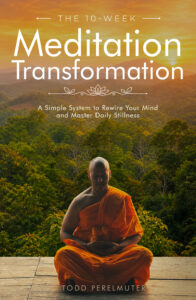
The full 10-week meditation journey, along with expanded teachings and answers to additional reader questions, is now available as
The 10-Week Meditation Challenge: A Simple System to Rewire Your Mind and Master Daily Stillness.
These 5 Minutes Could Shift Your Whole Week
Path to Peace Newsletter