
This article is part of the ongoing Meditation for All challenge. Subscribers to the free newsletter receive weekly guidance and a daily practice.
Some people became depressed or anxious. Others became restless. And some people feel all of their senses uncomfortably heightened.
These people are not experiencing issues from meditating too much. It is from not meditating enough. They had spent all of their lives lost in constant thought, always doing, never being.
They had decades and decades of repressed emotions they had not yet processed. Thinking and doing became so habitually ingrained in them, as it does for nearly all of us, that when they first started meditating they found it difficult or that it made them uneasy. But the fact is, meditation is the easiest, most natural thing we can do.
It can take a little while for some people to become used to peace and accustomed to stillness. The trick is to be gentle with yourself. Don’t force it. Go slowly. Undoing decades of habitual unconscious thinking doesn’t happen right away. But just like going to the gym, with consistent training, you will notice a difference.
Sometimes, when we first start meditating, sadness and other extreme emotions may feel like they’re being stirred up. However, these emotions aren’t created by meditation; they are revealed by meditation.
Most of our lives are spent distracted. We’re always so busy doing things that we don’t pay any real attention to our inner world. Because our inner pain and trauma, like all phenomena, are only temporary, only by looking at them, healing from them, and processing them can we move on to releasing them.
Meditation is simply the removal of all external distractions, and turning our attention inward. It doesn’t create anything — it reveals everything.
Are we patient or impatient? Are we agitated or relaxed without any outside stimulation? What is our internal state? Are we happy and at peace, or are we anxious and stressed?
Meditation is simply a check-in.
Many of us spend most of our lives being busy, always working or being entertained. Almost every moment of our lives is taken up with some activity. As a result, we never have the opportunity to heal from trauma, stress, or loss because we avoid processing it. It just sits beneath the surface, affecting us in various ways — sometimes our physical health, sometimes our mental health, and sometimes in how we navigate our relationships.
So we really need to acknowledge these thoughts that arise during meditation, even if they are sad and emotional. It’s beneficial to let them come up to the surface so they can evaporate.
However, if we don’t deal with them — if we don’t feel them, observe them, and sit with them until there’s no more agitation, we won’t be able to let them go completely. They’ll just sit under the surface, fester, and grow. Through meditation, once the healing has happened, a great peace and inner joy will emerge.
Why Is My Meditation Bringing Up Old Suppressed Emotions?
Most of our lives are spent suppressing and repressing painful emotions. Nearly everything we do is a distraction or a way to avoid what we’re feeling.
When we start a spiritual practice, it can take time for all those painful feelings to be sorted and processed. But if we don’t heal them, we pass our hidden pain onto our neighbors, coworkers, family, and children. And it lives in our body, turning into more pain.
It’s essential we find a safe and healthy way to allow these feelings to reveal themselves. When we observe painful emotions in meditation, the answer is to look deeper. It’s not easy, but this is the only way to realize that what we’re trying to run away from is not as scary or unbearable as we once thought.
Why Is Meditation Giving Me More Anxiety?
This is very common. We’re so used to doing things, and we become so attached to our desired outcomes, that we cannot be present, relaxed, and enjoy the journey. This creates stress.
The best thing to do is let go of expectations and allow whatever comes to come. No resistance, desire, or effort—just being. That is the path. The desired results will flow from that state of being.
Many times, our anxiety gives us anxiety. In this case, the best thing we can do — along with practicing meditation — is to turn our anxiety into curiosity. Really examine it when it starts to occur. Instead of resisting it, be curious about it. Instead of fighting it, welcome it.
This way, we don’t just ease our anxiety — we also develop a greater understanding of it. We begin to be able to see it as it arises, and we can respond by meditating or doing something that relaxes us, without fearing it.
How to Approach Meditation When Anxiety Arises:
I recommend starting with repeating a mantra. It’s easy and a good way to get started. After a few weeks, give breath meditation a try, where you simply focus on your breath.
Start slow and try to work your way up to 20 minutes a day. Some people can do 20 minutes right away, while others may start with only 2 minutes. Just feel what’s right for you, and don’t put any expectations or pressure on yourself. Just try to be present and relaxed.
Whenever we try anything new, it can take time before we get comfortable with it. Not only that, when you’ve been living your whole life constantly doing things, not doing things can feel very uncomfortable.
Thanks in part to smartphones, most of us spend all our time constantly entertained. We’ve unconsciously trained our minds to find peace and quiet uncomfortable and disturbing. We’ve also allowed an immense accumulation of undealt with pain and trauma.
When we first sit down with no distractions and simply try to be present and observe whatever arises, suppressed emotions often bubble up to the surface. This is normal and part of the healing process.
But there are some things you can do to avoid unnecessary struggle as you work through anxiety and other negative reactions.
Start With Mantra Meditation
Mantra meditation gives the mind something simple to focus on. While breath meditation can be the most beneficial in terms of awareness, it is also the most difficult. If you have a very chaotic mind, it can be difficult to simply focus on your breath.
After using mantra meditation for a few weeks or months, you may wish to move to breath meditation. Starting directly with breath meditation can sometimes create anxiety. If you still want to begin with breath meditation, using soothing meditation music can help lower anxiety.
Start slow and gradually increase your time. Whether it’s 2 minutes or 20 minutes, what matters is consistency. Don’t add pressure. Don’t chase results. Just be present, and allow yourself to relax.
Sit in a Position That Feels Comfortable
We all want to sit like a yogi in the perfect lotus position on the floor with no pillows. But it’s important to remember that many cultures in the East are used to sitting on the floor from a young age.
For many others, and especially Westerners, sitting cross-legged on the floor can be very difficult, and sometimes even painful. This can easily lead to anxiety and cause people to give up on meditation.
When you’re starting out, feel free to sit in a comfortable chair or on the couch. You can also sit in bed with your back against the headboard or supported by pillows. Over time, you can gradually work your way toward more traditional postures if you wish. As long as you’re not lying down in a way that makes you fall asleep, you’re doing just fine.
Don’t Resist Your Negative Emotions
Whether we suffer physical or emotional pain, our reaction is often the same — we want to look away. We resist the pain, and that resistance creates more suffering.
In meditation, we practice looking at the pain. We explore it, accept it, and allow it so that it can pass. As negative thoughts and emotions arise, let them be. Don’t fight them, because that will make them stronger. Don’t ignore them, because that will make them louder. Just observe them.
Notice that they aren’t as overwhelming as they seemed when you avoided them. Look closely at their nature. See how they all have the same characteristic of impermanence. Observe your thoughts without judgment. Simply accept them, and they will begin to diminish.
There are so many types of meditation, but which one is the best? This is the question we’ll discuss next week.
The Meditation for All Challenge takes place in my newsletter, where I share:
• Weekly practices that accompany the reading
• Common difficulties and how to work with them
• Step-by-step instructions for meditation mastery
If you are reading this on the website, make sure you’re subscribed so you don’t miss the next step.
The Challenge Has Now Become a Book
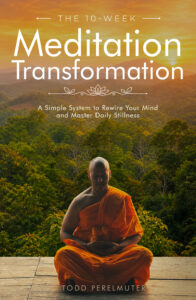
The full 10-week meditation journey, along with expanded teachings and answers to additional reader questions, is now available as
The 10-Week Meditation Challenge: A Simple System to Rewire Your Mind and Master Daily Stillness.
These 5 Minutes Could Shift Your Whole Week
Path to Peace Newsletter