If the unexamined life is not worth living, the unexamined mind is not worth having.
Who are we? At the deepest sense of ourselves? What is this consciousness peering out at the world? And is it possible to turn our awareness back on itself?
If we fail to look at ourselves, to understand who we truly are, to understand our unconscious thought patterns and habits, we are doomed to repeat our past, to live an unintentional life, and to keep making the same mistakes.
But if we start to look within, we start to break those patterns. Our thoughts become conscious. Our actions become intentional. And soon, our life starts to resemble the one we’ve always dreamed. It all starts by looking within. In this podcast.
The Need for Inner Accountability
Just like we need people who monitor the monitors, we need people who oversee the overseers, people who keep honest the people who are supposed to serve us. We need transparency. We need accountability, both in our governments and in our corporations.
But we need it internally as well.
If our mind goes unexplored and unexamined, and everything we do becomes a repetition of unconscious habits and patterns based on past events, trauma, or experiences, then we will continue reliving the same cycles. We will not be able to consciously create the life we truly want.
If our attention, our focus, our awareness itself goes unchecked, then we become slaves to whatever flashy thing grabs our attention. We cannot live a life of focus and freedom. Our energy and awareness are precious, and what we choose to focus on shapes not only our days but ultimately our entire lives.
That is why it is essential that we begin paying attention to our thoughts and to the nature of our thinking itself.
Exploring the Nature of Thought
Step 1) Deeply Explore Your Thoughts
What are they?
Where do they come from?
Are they helping us, serving our highest good, or harming us?
Step 2) Look at What Looks
To turn awareness back onto itself and observe its nature.
Is awareness calm or chaotic?
Focused or scattered?
Stable or constantly jumping from one thing to another?
One practice explores the mind, the ego, and the conditioned responses of the brain. The other explores awareness itself, that mysterious spark of life experiencing itself through us.
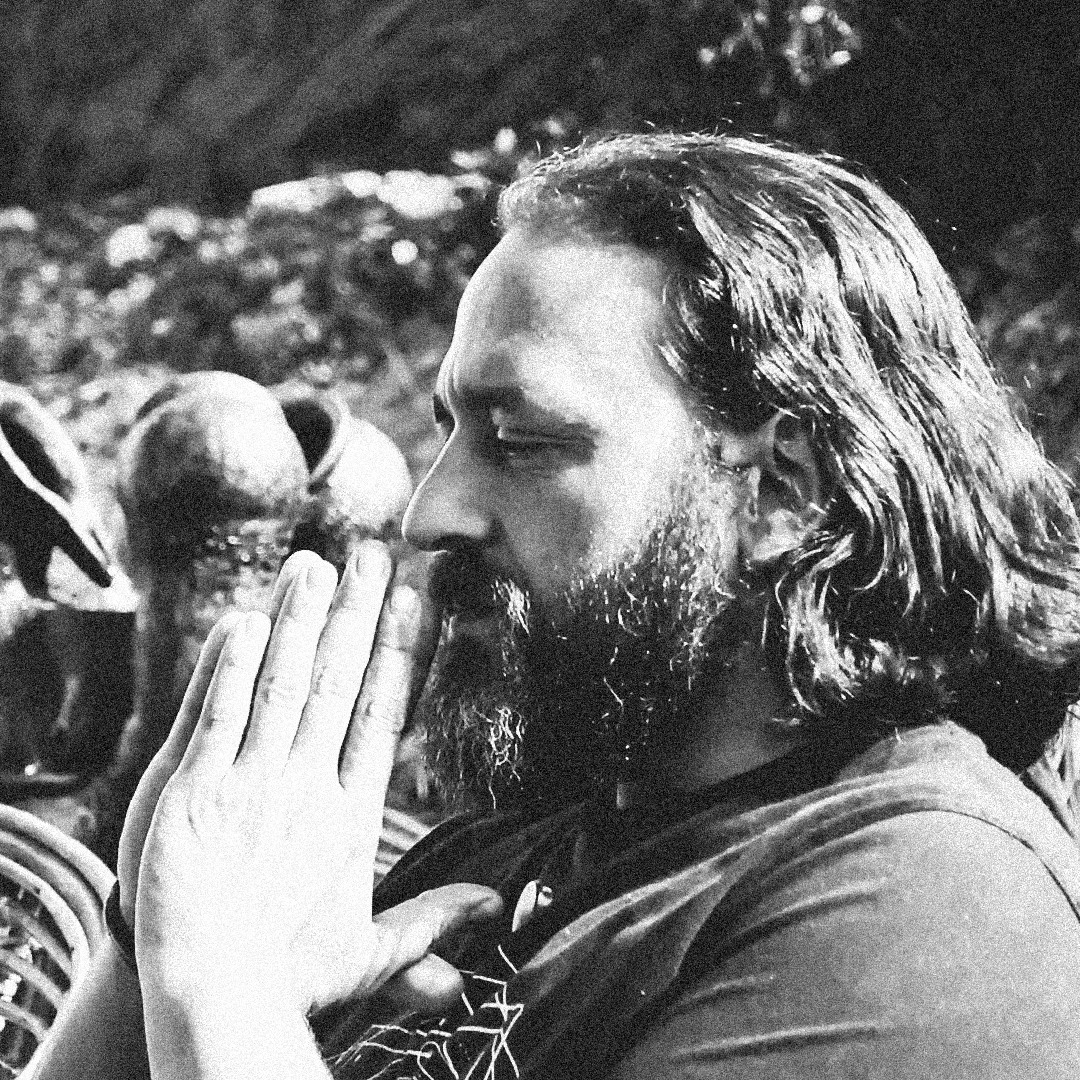
The best way to begin looking inward is to close our eyes. Automatically, awareness begins shifting from the outer world to the inner world, and we become capable of observing our thoughts with greater clarity.
Notice what a thought actually is.
Is it simply a sound the mind hears? Where does it come from? Does it originate in the brain? Is it your voice or someone else’s? What stimulated the thought you are having right now? What led to this exact moment of thinking?
We do not have to answer these questions. The point is not to force conclusions. The point is to develop curiosity and observation.
We are learning to listen without judgment, without labeling, and without constantly adding more thinking onto thinking itself.
Watching Thoughts Without Identifying With Them
As we observe, we begin to notice how thoughts arise and disappear on their own. One thought may lead to another, but each one comes and goes like waves rising and falling in the ocean.
Sometimes thoughts are positive. Sometimes negative. Sometimes peaceful and neutral.
But all we are doing is watching.
And slowly we begin to notice something important: there is a space between ourselves and the thoughts.
Normally, thoughts consume our entire field of awareness. We become completely identified with them. We lose the present moment and become trapped inside mental stories.
But when we begin paying attention consciously, thoughts start to feel smaller and more distant. A witnessing presence begins to emerge. Thoughts are still there, but now there is also the awareness observing them.
Perhaps your mind is replaying a betrayal, a conflict, or a painful memory. Perhaps you are obsessively searching for solutions to some problem in your life. Perhaps your mind is drifting toward future worries or replaying conversations from earlier in the day.
Notice how thoughts are constantly changing. They never stay the same for very long. The mind is in constant movement, and most people are easily distracted by it.
The Mind as a Conditioning Force
Are your thoughts mostly peaceful, or are they constantly stirring up fear, desire, anger, and emotional chaos?
The more we observe our thinking, the more we begin to realize how much power these tiny thoughts have over our lives. We build identities around them. We get pulled into their stories as though every thought is urgent and deeply important.
Thoughts influence habits, impulses, emotions, and behavior. They become like an inner narrator constantly whispering instructions into our minds about what to think, what to say, and how to react. And if we are not careful, that voice will completely run our lives.
But through observation we begin to realize something else: the mind does not always have our best interests at heart. It is not always wise. It is not always peaceful or loving. So we learn to hear thoughts without automatically obeying them.
A thought is simply a mental event arising and passing away, just like a breeze moving through the air. Thoughts only control us when we are unconscious of their influence. Once we become aware of them, they begin losing their power. It is similar to propaganda. Once you recognize propaganda for what it is, it becomes far less effective.
Why We Fear Stillness
Subconsciously, many of us believe we need constant thinking. We feel that if we are not constantly analyzing, planning, solving problems, creating, or mentally stimulating ourselves, then we are somehow wasting time. Many people fear silence because they associate stillness with emptiness or loneliness.
That is why people constantly seek distraction. Television in the background. Endless scrolling. Noise. Entertainment. Mental stimulation. The thinking mind becomes like a comfort mechanism.
But we do not actually need constant mental noise.
We do not need a voice endlessly talking inside our heads, especially when that voice often creates stress, fear, and confusion. There is also a much deeper intelligence within us.
Just as the body knows how to digest food, heal wounds, regulate the heartbeat, and maintain balance without conscious thought, there is also a deeper wisdom within consciousness itself.
This intelligence already knows how to live, respond, survive, adapt, and grow. Often, it is excessive thinking that interferes with this natural wisdom and prevents us from experiencing peace.
Beyond the Noise of the Mind
The constant movement of thought keeps us psychologically trapped in time. Like the hands of a clock measuring movement, the restless mind keeps pulling us into past regrets and future anxieties.
Stillness can feel uncomfortable at first because we are so accustomed to inner noise.
But if we remain present long enough, something remarkable begins to happen. A deep peace begins to emerge. And from that peace comes joy. Then the mind immediately tries to grasp the experience, analyze it, recreate it, and possess it. Desire returns, and once again the mind disturbs the peace.
But instead of fighting the mind, we simply continue watching.
We allow the muddy water to settle naturally instead of constantly stirring it.
Sometimes life throws pebbles into the lake and creates ripples. Difficult moments happen. Emotional reactions arise. But if we continue observing peacefully, eventually the water settles once again.
Over time, stillness itself becomes more natural.
Turning Awareness Back on Itself
Once we begin understanding thought, we can move to the second step: observing awareness itself. We begin asking deeper questions. What is this awareness looking through my eyes right now? Does it have a shape? A form? A location within the body?
If I place my attention fully on my hand or my foot, does awareness not appear there as well? Is awareness broad and open like a light filling a room, or narrow and concentrated like a laser? Can awareness remain steady on one object, one breath, or one sensation for more than a few seconds? Or does it constantly wander? Can we consciously direct it? And what happens when awareness becomes completely concentrated on a single point?
As focus deepens, thoughts naturally begin to quiet.
We are no longer suppressing thought or distracting ourselves from it. We are learning how to guide the mind instead of being controlled by it.
This is the beginning of mastery.
From Servant to Master
Most people spend their entire lives being dragged around by unconscious thoughts, emotions, memories, and reactions. Painful experiences from the past continue replaying again and again because the mind has never learned how to release them.
But when we observe thoughts without feeding them, without reacting to them, their grip begins to weaken.
Meditation itself is not difficult. What is difficult is facing the inner chaos we have spent years avoiding.
Many people say spirituality or meditation increases their stress, but meditation is not creating stress. It reveals the stress that was already there beneath the surface. And this practice is not limited to sitting with closed eyes. We can observe ourselves anywhere, at any moment, while walking, speaking, working, or simply living life.
The moment awareness enters unconscious patterns, those patterns begin losing their control over us. Other people stop triggering us so easily. Old emotional wounds begin loosening their grip. And slowly we begin discovering who we truly are beneath conditioning, beneath memory, beneath thought.
The One Life Behind Everything
If we feel lost, confused, or disconnected, then perhaps the answer is not to look further outward, but deeper inward. Through understanding ourselves, we begin understanding others. Through understanding consciousness, we begin understanding life itself.
The same laws of nature that govern the stars and galaxies also govern the human mind and body. There is no true separation.
The source of you is the source of everything.
These 5 Minutes Could Shift Your Whole Week
Path to Peace Newsletter