
This article is part of the ongoing Meditation for All challenge. Subscribers to the free newsletter receive weekly guidance and a daily practice.
When learning any new skill, it comes with a lot of questions and a lot of challenges. Knowing those answers and preparing for those obstacles before they come up can help us succeed instead of stumble. Here are some of those most common questions and predictable pitfalls:
Is It Okay to Skip a Meditation If I Don’t Feel Like It?
Nobody’s perfect and we shouldn’t be too hard on ourselves if life stuff happens and we miss a meditation here and there. But, with few exceptions, we should do our very best to make meditation a consistent daily habit. It improves our mood, helps us focus, and improves our relationships.
Here are just some of the reasons why you should never skip meditation:
Every Meditation Builds on the Last One
Meditation is like building a house. Everyday there is a little bit of weather erosion that takes place. You have to keep building or all the work you’ve done will have been for nothing. At first, you might start out in the basement, and so you won’t see any progress for a long time. But with a sturdy foundation, the frame can pop up and all of sudden you can really start to see a house coming together.
In meditation, patience and setting aside expectations are key. Don’t be too obsessed with each meditation experience, but rather focus on your overall progress. Pay more attention to the reasons for meditating in order to stay motivated.
Meditation Makes Us Better Parents, Kids, Siblings, Friends and Neighbors
We can take a day off work, but most of us can’t just take a day off from our other social responsibilities. That’s why daily meditation is so important. We need to make sure we bring calm, peaceful, loving strength to our relationships.
It’s not fair to our loved ones that just because we skipped a meditation we’re now more stressed and less present with them. For the sake of others, and our valued relationships, it’s important that we take some “me” time so we can operate at our best for the people we love.
There’s Nothing More Important Than Our State of Mind
Everything we do stems from our mental state. Our choices, our effort, our awareness and conscientiousness, all extend out from our mind. Our habits, actions, deeds and words are all projections of our mindset. Whether we are disciplined or not, focused or not, joyful or not, fearless or not, all depends on our state of mind. As long as we make our minds – and by extension, meditation – a top priority, nothing can derail our progress in life.
Habits are Hard to Build and Easy to Break
Just one missed day can lead to all days missed. That’s how it starts. We know our own human nature enough to know that one day doing the wrong thing is enough to create a bad habit. Years and years of hard work can be all for nothing if we fall out of practice.
But, the good news is that when you decide to get back into it, all the benefits will come back surprisingly quickly. So wherever you are in your journey, today is the day to get back into it.
It Leads to Discipline, Determination and Fortitude
There are many benefits to meditation. But some of those benefits actually have nothing to do with the meditation itself. Just by simply making the effort to tune out the noise and sit still in meditation for an extended period of time, you are exercising extreme self-discipline.
The more you meditate even when you really don’t want to, the more inner strength and resolve you are building. This discipline will spill out as success into every aspect of your life.
Every Single Day is Precious
Every single moment is beautiful and miraculous. We’re not promised any certain number of days and we must be grateful for every single one. We must live every day to the fullest and honor this amazing existence.
The more present we are, the more we fully live. Period.
Meditation helps us break out of our head and into the real world of the here and now. Don’t waste a moment. Every moment is an opportunity to grow, evolve, heal, and prosper. Meditation simply helps us down that path.
When we meditate, no matter what else is happening in our lives, we can recenter our minds, find balance, recharge, and ready ourselves to take on whatever comes at us. Meditation gives us the vital time we all need to process our thoughts and emotions, to become present and focused, and to act from a place of serene wisdom rather than irrational fear.
The world can be daunting and every day can feel like it’s grinding us down. If we don’t take a little time every day to process and heal from yesterday’s difficulties and stresses, we’ll get crushed.
Getting crushed by our worries, anxieties, and stressors can take on many forms: depression, addiction, chronic pain and illness, anger and frustration, impatience and short-temperedness, as well as any number of other mental health conditions. It’s more important than ever to take some time every day to release those negative emotions and recharge so we can take on the day and perform at our best.
Here’s how you can build a consistent meditation habit:
- Choose the Right Meditation Type
There are many different types of meditation and different people prefer different methods. Some people like to use a mantra, others like to focus on their breath, and others like to turn their focus to their body. All three of those meditation methods are excellent for increasing focus, peace, and self-discipline.Methods such as guided meditation are a little too easy, unfortunately. They do not increase our self-discipline, however, they can be very relaxing and pleasant. Relaxation is an important element of mental health and guided meditation can have many benefits, but self-discipline, focus, awareness, a deeper understanding through personal inquiry and firsthand discovery, and transforming the mind to always be more peaceful are not some of them.
If you enjoy guided meditations, absolutely do them in addition to the other types of meditation listed above. Just make sure the foundation of your meditation practice helps you become your own guru. - Schedule It Into Your Daily Routine
You don’t find the time to meditate, you make the time. Everyone can make time for anything that’s important to them. And when it comes to meditation, people report needing less sleep, being faster at work, and finding they’re more focused and intentional throughout the day. 20 minutes can save you hours.
Meditation doesn’t cost you anything; it’s an investment in your life that pays off handsomely. Without a consistent schedule, the chances of it sticking are more unlikely. Pencil it somewhere and do it.
First thing in the morning is the time most people report being able to do it consistently because distractions, surprises, and emergencies haven’t started popping up yet. Before you do anything else, you can always meditate. But some people love it after their daily exercise or on the train to work. Whatever works for you, that’s the best time. - Stick to It Everyday
Being self-disciplined in your meditation practice will lead to self-discipline in every aspect of life. No matter how much you don’t want to meditate, do it! This will train that stick-to-it-iveness muscle in your mind.
The more you stick to it, the more your mind becomes comfortable with sticking to and completing any difficult tasks. Not only that, but the self-discipline will build upon itself and every day it will grow and grow. - Slowly Increase the Time You Meditate
Usain Bolt wasn’t the fastest man alive the day he started walking. Just like him, you most likely won’t meditate like the Buddha on your first try. That’s ok. Good things take time and patience.
Let go of your expectations and don’t be too hard on yourself. In Buddhism, they call it taking the middle path: don’t be too lazy and don’t go so crazy that you burn out. Life is a marathon, not a sprint.
If a 5 minutes a day is something you can stick to, start with that. After a month of a solid practice, maybe add a minute. Go at your own pace and listen to your higher self. Don’t, however, try 2 hours your first day, think it’s just too hard, that it’s just not for you, and give up. That’s not you talking, that’s your egoic mind clinging on for dear life. The ego likes entertainment and distraction, instant gratification, and complaining.
The ego, thanks to modern technology, has been programmed to have a microscopic attention span. It is impatient. But that is not who you are. Do you think if you were born 20,000 years ago that you’d feel the need to check your phone every five minutes? Of course not.
So just be patient, observe your thoughts, but don’t listen to them or identify with them. You are not your thoughts. The more you realize this, the less power negative thinking will have on you. - Gradually Advance to More Challenging Types of Meditation
This is a key step to building unstoppable self-discipline in your meditation, but it is also optional. Using a mantra is generally considered easier than observing the breath or the body. It’s a great way to begin. Using some sound, word, or phrase that resonates with you, you repeat it silently in your mind continuously.
Once you work your way up to 20 minutes, you may go further if you wish by switching to breath meditation. Over time, you may be able to work your way up to 30 minutes twice a day. After that, you can try body scanning, where you move your focus up and down your body as if there is an invisible grid covering your body that you move consciousness along.But take your time. There’s no rush. Doing whatever amount you can stick to is always the right amount. All meditation is good meditation. If you can work up to 20 minutes a day of mantra meditation, you’re already getting 90% of the benefits. If you can make a 5 minute mantra meditation habit and make it stick for a year, you’re already in the top 1% of the world. Adding 5 minutes a year is a great way to make a habit that actually sticks.
- Over Time Proceed Towards More Traditional Meditation Postures
When you begin, sit however is comfortable for you – in a chair, in bed with your head propped up with a few pillows, sitting on the ground. Whatever is relaxing for you.
As you progress, you can try working your way up to sitting on the floor without back support, in a lotus or half-lotus-pose. This is also known as Indian style.
The core muscles and discipline you develop from sitting in more challenging postures will extend to how you approach everything in your life. Meditation is just a microcosm for the rest of your life. If we practice it with discipline, we will develop discipline. But, make sure it’s not too challenging. It must always be first and foremost relaxing, and therefore, sustainable.
Do I Have to Meditate Daily? What If I Have a Busy Schedule?
Like anything in life, the more effort you put in, the more you get back. The same is true for meditation.
When it comes to meditation for beginners, it is essential not to be hard on yourself if something comes up and you miss a day. Incorporate meditation into your daily habits with love, gentleness, and positivity.
I know it can seem like we are all so busy these days. However, even very busy people, such as Jack Dorsey who meditates for 2 hours every day, reports feeling like he has more time in a day because he is much more productive and focused.
Many daily meditators have reported waking up 20 minutes earlier than normal to meditate. Thanks to the 20 minutes of deeply restful meditation, they experience much more energy throughout the day and require less sleep.
If Jack Dorsey can find time to meditate for two hours everyday, so can you. Clear some time out of your busy day and stick to it. Many people who are very busy have found that waking up 30 minutes earlier to meditate gives them more energy throughout the day than the extra 30 minutes of sleep would have. You can do it!
How Do I Find Time to Meditate?
Every one of us can set the alarm a few minutes earlier in the morning. Before dinner is also a good time for some. Monks even like to meditate at 4am as they say that is when the energy is most peaceful and calm because the world hasn’t woken up yet. But you don’t have to go to that extreme. If there’s no other good time for you, right before bed is a great option that sets you up for a deep sleep and a great morning.
Finding time for meditation is just like finding time for the gym or anything else that’s important—if it’s important, you’ll find a way. Set up a time to do it, tell your family that that is your important meditation time and to not to disturb you except for emergencies, turn off your phone, and find a quiet, comfortable place to sit.
As a great Buddhist monk once said, “If you don’t have time to meditate for half an hour, you need to meditate for one hour.” His point was that if you’re too busy to fit in a small amount of time to meditate, your life must be so hectic that you really need to meditate for twice that amount.
In the next & final week of our meditation challenge, I will share about the topic: Does no results mean I’m doing it wrong? After how many sessions will I notice a change?
The Meditation for All Challenge takes place in my newsletter, where I share:
• Weekly practices that accompany the reading
• Common difficulties and how to work with them
• Step-by-step instructions for meditation mastery
If you are reading this on the website, make sure you’re subscribed so you don’t miss the next step.
The Challenge Has Now Become a Book
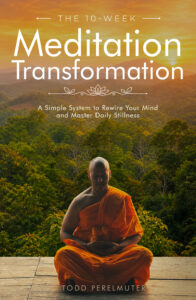
The full 10-week meditation journey, along with expanded teachings and answers to additional reader questions, is now available as
The 10-Week Meditation Challenge: A Simple System to Rewire Your Mind and Master Daily Stillness.
These 5 Minutes Could Shift Your Whole Week
Path to Peace Newsletter